
North Street, Elgin, Moray Your personal injury claim is primarily about money. It’s true that other aims are possible - and often more important than just the compensation. One example is maximising your level of recovery from injuries through rehabilitation provided as part of your claim. Another possible driver is “trying to make a point” so the negligent party takes notice and changes their practice for the future, reducing the chances someone else will be injured in the way you were. It's all about money But personal injury claims are really about financial compensation. The law tries to put you, as the injured person, back in the position you would have been if the accident had not happened – so far as that is possible in money terms. Given the emphasis on money, the aim is to maximise your damages. What are the main factors which have a bearing on how much money you receive (if any) at the end of your claim? Factor 1: Whether your claim succeeds at Continue Reading
Problems Diagnosing Whiplash Injuries

The Westminster Government is concerned that the quality of medical evidence in whiplash cases is not as good as it should be. It’s reckoned that claimants are duping doctors and exaggerating or inventing their whiplash symptoms. The Government proposes accreditation of medical experts to ensure greater consistency. The attack on whiplash claims is unrelenting. The insurance industry now suggests review of the law so that, as a matter of public policy, you should not be allowed to claim compensation for “low value” whiplash; instead, all insurers should have to pay is the cost of treatment, such as physiotherapy. What are the problems with whiplash? The terminology could be clearer, for a start. Whiplash is really a 'neck sprain', which commonly results from road traffic accidents where there is a rear end impact. It happens in an instant. The head is thrown first backwards and then forwards. Typically, the whole injury “event” is over within half a Continue Reading
How much compensation will you get for a whiplash injury?

Photograph: "Spines" by Nicky Mack Whiplash injuries to the upper spine can range widely in severity. From neck stiffness lasting for a day or two, the symptoms can extend to pain and restriction of movement which persists for months or even years. We have posted on this Blog previously about the “classic” whiplash accident mechanism – usually a road traffic accident involving a rear end shunt. Whiplash remains a controversial injury, which has become a bit of a political football. Because there are no physical signs associated with whiplash symptoms – such as would show up on x-rays or other scans – exaggeration and fabrication of claims is always a possibility. Likely claim value is a factor in deciding whether a claim is worth it or not If you are considering making a whiplash claim, you will be wondering how much your claim is going to be worth. It is reasonable to consider this, as you will want to weigh up whether it is going to be worth the time and Continue Reading
Medical Treatment Following Personal Injury (Keep Going Until You Are Discharged)
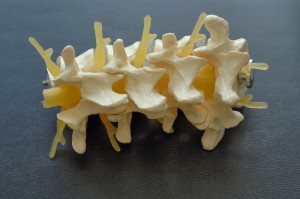
"Spine once more" found on flickrcc.net One of the frustrations for solicitors helping victims of accidents with their compensation claims is where medical records show that the injured person did not take up all the treatment which was available to them while recovering from their injuries. The “pain and suffering” value of your personal injury claim depends, broadly, on the severity of the initial injury and the length of time it takes you to make a full recovery. You rarely win if it's "you versus your medical records" Whilst your own evidence about the duration and extent of your symptoms will carry some weight, it is likely to be trumped by anything inconsistent contained in your medical records. So, for example, it will be difficult to argue two years after an accident that you have continuing shoulder pain related to the accident if your GP referred to you for physiotherapy at the 6-month mark and you failed to attend at all or stopped going for treatment before Continue Reading