Wintry weather is persisting into March around the Moray Firth. Inevitably, in winter, there tends to be an increase in road traffic accidents. At this time of year, we are more likely to be driving in the dark and on roads affected by snow and ice. Repeated freezing and thawing also increases the number and size of potholes in the roads. What steps can you take? Equipment to carry in your vehicle The Royal Society for the Prevention of Accidents (RoSPA) recommends certain basic safety equipment to keep in your vehicle at all times, so you are prepared if the weather deteriorates. This should include a towrope, de-icing equipment, a spare wheel, a torch, a first aid kit and a warm blanket. Checks on the vehicle itself In addition, you should check that your vehicle itself is properly prepared for winter conditions. Check your tyre pressure regularly and ensure that you have sufficient tyre tread as this will reduce the risk of loss of traction and skidding (as well as improving Continue Reading
Why early settlement of your personal injury claim is probably a bad idea
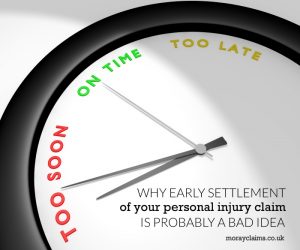
If you have been the victim of personal injury due to the fault of another person or organisation, you will be entitled to compensation. Among other things, you will receive damages for the pain and suffering of your injuries and for any financial loss you have incurred, such as wage loss. There is a process you need to go through to get proper compensation. However, we find more and more that insurance companies tell people in your position that this is unnecessary. It is increasingly the case that injured persons are contacted directly by the insurers for the other person or organisation - with an offer to settle their claim there and then. In some cases, this involves a representative of the insurers “door-stepping” the injured person and virtually bullying them into agreeing. It is all too easy to fall into the trap of believing what is implied in the close attention these insurers pay to you: that they have your best interests at heart. Remember that the insurer’s principal Continue Reading
Whiplash injury: one way to reduce the risks
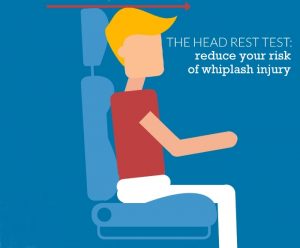
Whiplash gets a lot of negative press. It is a type of injury where there is scope for people exaggerating their aches and pains to get more compensation or even inventing them completely. The Westminster Government is currently on a mission to weed out spurious claims. On the other hand, if you have ever suffered a whiplash injury to your neck or back, you will know it is not something to be taken lightly. The injury is very real. Whiplash can cause a considerable amount of pain and inconvenience to the injured person. Everyone knows that prevention is better than cure and here’s an idea for simple action you can take to reduce the risk of you being the victim of a whiplash injury. It all boils down to proper adjustment of the head restraints in your vehicle. How best should you position the head rests in your vehicle? It is not sufficient to have a head restraint attached to the top of your seat. You must make sure it is adjusted to be in line with the top of your Continue Reading
Will I Have To Go To Court If I Make A Personal Injury Claim?
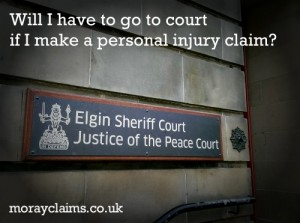
Many people worry that, if they pursue legal action, they will have to endure the stress and hassle of a court hearing (known as a ‘Proof’, in Scotland). We get this question time and again: "Will I have to go to court if I make a personal injury claim?" Solicitors and other legal professionals are more used to the court setting, of course, though it is not stress-free for them either. We understand that the prospect of having to go through court proceedings is daunting, perhaps to the point that it may put you off the idea of making a claim entirely. Most claims settle "out of court" It is important not to get too hung up on the idea that your claim will have to “go to court”. The main reason for this is that, in the vast majority of cases, claims are settled out of court – either because it is never necessary to raise a court action at all or because the claim settles after a court action is raised but before the Proof. The parties on each side of the claim will Continue Reading
