When you receive compensation from a personal injury claim, in most cases, there are damages paid for losses beyond the personal injury itself, such as loss of earnings or replacement of damaged clothing. The claim for the pain and suffering associated with the injuries is known under Scots Law as “solatium”. In England and Wales, the term used is “general damages”. We value the claim for solatium by finding reports of previous cases from the courts where the claimants had similar injuries. In general terms, the valuation depends on the nature of the injuries sustained and the length of time it takes you to recover from them. Valuing personal injury claims is not a straightforward exercise because no two cases are ever precisely the same. Yet justice requires that there should be consistency between awards. It is now 20 years since the first publication of the Judicial Studies Board (“JSB”) Guidelines. The JSB Guidelines are in booklet form and are the result of the deliberations of Continue Reading
Ladder Accidents
[NOTE: This article also forms the basis of a podcast episode - "Ladder Safety Hazards" - available on this website. If you prefer to listen to this content rather than read it, please go to the podcast audio] Ladders are surprisingly dangerous. The introduction to the Health and Safety Executive’s (HSE) publication “Safe Use of Ladders and Stepladders – An Employer’s Guide” (link to PDF - download begins immediately) confirms that: “A third of all reported fall-from-height incidents involve ladders and stepladders. On average this accounts for 14 deaths and 1200 major injuries to workers each year. Many of these injuries are caused by inappropriate or incorrect use of the equipment.” There is a reported instance of someone suffering a fatal injury after losing their footing on the second rung of a ladder, falling backwards and hitting their head on the floor. Unfortunately, judges have a tendency to regard ladder use as requiring nothing more than common sense. As a Continue Reading
Child accidents: why it can be a bad idea to prejudge your chances of success

If you have been injured in an accident and you think it was partly or wholly your fault, it might discourage you from making a claim at all. You need to remember that negligence is a legal concept. Injured people who think they are legally to blame for the accident which caused their injuries are often wrong. It is always worth getting legal advice from a specialist personal injury solicitor. Where the injured person is a child, often it can appear that they have been foolhardy in their behaviour. Cases in which children have climbed onto things and fallen or otherwise hurt themselves are nothing new to the law. In a case from the year 2000, the eminent judge, Lord Hoffman, pointed out that the law appreciates that the ingenuity of children “in finding unexpected ways of doing mischief to themselves and others should never be underestimated”. Lisa Wardle made a claim against Scottish Borders Council on behalf of her nine-year-old daughter. This was after her daughter fell Continue Reading
Contributory negligence: what is it?
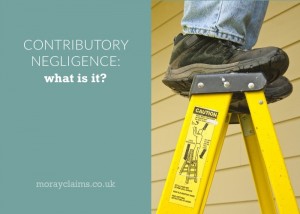
By definition, contributory negligence can only come into play where your claim is going to be successful. The insurance company dealing with the claim will have accepted 'primary' liability and, in doing so, they accept they have to pay you some compensation. However, they want to restrict how much they have to pay to you and contributory negligence is one way they can try to do that. It means they are saying the accident or the injuries you have suffered were partly due to your own fault. This could be because: you did not take proper care when crossing the road and that was part of the reason for you being knocked down; you tripped over something you ought to have seen, if you had been taking reasonable care; you did not wear a hard hat on a construction site and you were more seriously injured than you would have been otherwise when something fell on your head; or as per the photograph at the top of this article, you were injured due to Continue Reading