In the period 2004/05, according to HSE statistics, a third of all reported incidents involving a fall from height also involved ladders or stepladders. This equated to an average of 14 deaths from ladder accidents per year and 1,200 major injuries in the workplace. Many injuries were caused by incorrect use of the equipment. HSE’s theory was that misuse of ladders at work could be partly explained by the way they were used in the home. They did not elaborate on that observation but they probably meant that we all tend to learn about the use of ladders and stepladders by trial and error and from other people (e.g. relatives) who are not necessarily trained in their use. This results in us having an unjustified level of confidence in the use of ladders and stepladders. It can lead to dangers in the home but it is likely to be much more dangerous in the workplace. HSE’s figures for 2014/15 show that falls from height accounted for nearly three in ten fatal injuries to workers (41 Continue Reading
Wrist Injury Claims
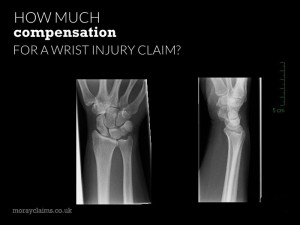
Elgin’s Dr Gray’s Hospital takes its name from Alexander Gray. He was born in Elgin but died in India in 1807, having spent over 20 years working as a surgeon for the East India Company. He had amassed quite a fortune and he bequeathed the bulk of his estate to his native town. The sum of £20,000 (probably equivalent to more than £1 million today) was allocated “for the establishment of a hospital … for the sick and the poor”. Gray’s next of kin contested the will and it was not until 1814 that a court declared the money to be free for use to buy a plot of ground on the west side of the town. Building went ahead from the following year and the (then, 30-bed) hospital opened on 01 January 1819. 1814 was an important year for the future practice of medicine in Moray but it was also an important year in the wider medical world. 1814 was also a significant year in relation to the diagnosis and treatment of wrist injuries. In 1814, Abraham Colles (1773–1843), an Irish surgeon who Continue Reading
Pre-Action Protocol For Personal Injury Cases Becomes Compulsory

Shops in Scotland began charging 5p for single-use plastic carrier bags on 14 October 2014. Under the previous free-of-charge system, Scots were using around 800 million new bags a year. Scottish Government figures for 2014/15 show that the new law resulted in an 80% drop in plastic bag issue - equivalent to around 650 million fewer bags. It is becoming second nature for shoppers to take a bag with them from home. As a result, the spin-off benefits are obvious - for the environment and the good causes receiving donations collected from the bag tax. Having to pay the penalty of a 5p charge, if you don't provide your own bag, has transformed plastic bags from a nice-to-have optional item into a "don't leave home without it" necessity. The fact that plastic bag provision by supermarkets has dropped by 80% since the bag tax came in suggests it is not an exaggeration to say that we now regard providing your own bag as compulsory. Personal injury claims in Scotland are also Continue Reading
How can you tell if someone has been negligent?
July 1999 was a momentous month for Scottish golf. The British Open returned to Carnoustie for the first time since 1975. More importantly, Paul Lawrie became the first Scottish winner since 1985 (and is still the most recent Scottish winner of a major). However, that championship will also be remembered for all the ‘wrong’ reasons French golfer, Jean van de Velde, snatched defeat from the jaws of victory, throwing away a 3-shot advantage on the final hole. At the 18th, a par 4, he could have taken 6 shots and still won - but he took 7, in fact holing a decent putt just to get himself into the playoff which he eventually lost. His play on the final hole is true ‘car crash’ television as he seemed to regress to beginner standard in dealing with the rough, a bunker and a water hazard. One author has classified van de Velde's problem as one of 'overthinking' In his book “The Art of Thinking Clearly”, Rolf Dobelli explains that skills involve an element of instinct and feeling. Continue Reading