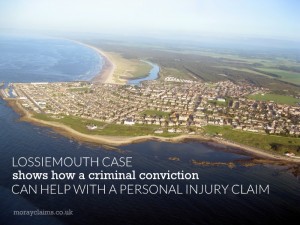
A personal injury claim arising from an incident which took place in a Lossiemouth pizza takeaway has provided a good example of how a criminal conviction can be used in a personal injury claim to pave the way for the claim to succeed. This is a procedural decision from the All-Scotland Personal Injury Court in Edinburgh. In this article we will consider three aspects of how a criminal conviction helps with a personal injury claim. Firstly, we will look at the law in relation to the use of criminal convictions in civil proceedings such as personal injury claims. Secondly, we will see how the reference to a criminal conviction in the Lossiemouth case helped the claimant establish that compensation should be payable to him. Finally, we will look at the question of whether it is ever possible for a person who is blamed for an accident/injury to argue their way out of it even if there is a criminal conviction against them. Continue Reading
The Cost Problem with Medical Negligence Claims (and ways to get round it)

If you are above a certain age, you may remember the following scene. Seated at a table in a San Francisco diner, Inspector Harry Callahan’s first bite of a hotdog is interrupted by the ringing of an alarm in the street outside. Muttering an oath, Inspector Callahan wipes his mouth and heads out to investigate. Stepping onto the sidewalk, he draws and cocks his .44 Magnum revolver. Its cylinder has 6 chambers, each holding one bullet. He sees a car draw up outside the bank across the road and, almost simultaneously, a man backs out of the bank, wielding a shotgun which is pointed into the premises. A bank robbery is in its final stages. Callahan warns the man with the shotgun to “halt” but the robber’s response is to spin and fire in Callahan’s general direction. Callahan downs the robber with a single shot. There are two men in the front of the getaway car. A third runs out of the bank and dives headlong into the vehicle through the open rear passenger window. The car Continue Reading
FAQs about After the Event Insurance and Speculative Fee Agreements

Given the way we deal with personal injury claims on a ‘no win- no fee’ (or ‘speculative’) basis at Moray Claims / Grigor & Young, we have to have ‘After the Event’ (‘ATE’) insurance in place. ATE insurance is “after the event” in the sense that your accident was the “event”. If you did not have any ‘Before the Event’ insurance in place (e.g. legal expenses insurance included as part of your house contents insurance) and you do not qualify for legal aid, we need to find another way to insure against the risk that your claim will be unsuccessful and a court makes an award of costs/expenses against you. ATE insurance insures against that risk of adverse costs. In this article, we will consider three questions related to ATE insurance and the speculative fees agreement we get you to sign in conjunction with the ATE insurance. Continue Reading
The Biggest Problem with Medical Negligence Claims
If you consult a solicitor about a possible personal injury claim, you will have a lot of questions. Common examples would be: How much is my claim likely to be worth? How long will it take? But the most important question of all is probably: do I have a claim at all? Lawyers will decide the answer to that on the basis of whether reasonable prospects of success exist. It usually boils down to whether your claim has a better than 50/50 chance of succeeding. So, if the most important question is "Do you think I have a claim?", your solicitor will be keen to reach a view on that issue as quickly as possible. In many situations, your solicitor can reach a provisional view on your prospects of success immediately. They can often give you advice on your chances, just on the initial information you give them. If you’ve been injured in a road traffic accident where another vehicle ran into the back of yours, it was probably their fault. You were on the main road Continue Reading
