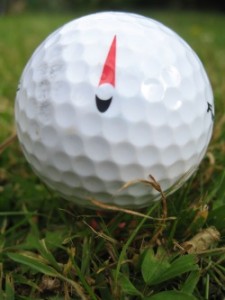
In Scotland, there are more than 550 golf courses and Moray has 9 of them. I’m a (sadly, very inactive) member of Moray Golf Club (Lossiemouth), which has two fantastic links courses. An appeal decision of the Court of Session from March 2013 has health and safety implications for golfers and golf clubs all over Scotland. The Facts of the Case The case of Phee –v- Gordon concerned an inexperienced golfer (Mr Phee) who sued Niddry Castle Golf Club in West Lothian and a member of the golf club (Mr Gordon) as the result Mr Phee losing his left eye after being struck by a golf ball from a wayward tee shot hit by Mr Gordon. Arguments that Mr Phee was partly to blame for his injury were rejected by the court. However, the appeal was successful in that Mr Gordon convinced the court that the blame which had been apportioned as 30% to the golf club and 70% to Mr Gordon following the initial hearing of evidence should be reversed – and more - on appeal. In other words, though the Continue Reading
Not Wearing A Seatbelt: How It Can Affect Your Personal Injury Claim
General issues about contributory negligence in PI cases In many personal injury claims, though it’s clear that the accident was the fault of someone else – which means the claim should succeed - there can be arguments about whether you as the injured person should share some of the blame for the accident. This is what is referred to as contributory negligence. It is often possible to counter arguments for contributory negligence, meaning that your claim succeeds in full. It is up to the other side to prove contributory negligence applies in the circumstances rather than being up to you to prove that you did take proper care for your own safety. If contributory negligence applies, your compensation will be reduced. In our experience, across the personal injury accident spectrum, reduction rates most often tend to be in the 10% to 25% range. In other words, for example, if contributory negligence is 25% then you lose one quarter of your damages. Why the level of Continue Reading
A Personal Injury Claim is not a “Small Claim” in Scotland
In Scotland, a “small claim” is a type of Sheriff Court procedure which applies to claims with a value of up to and including £3,000. What Sorts of Claims are Small Claims? There are three kinds of claim which can be raised under small claims procedure and they are as follows: A claim for payment of money A claim for delivery or recovery of moveable property A claim for implement of an obligation Claims for payment of money are, in our experience, the most common type of small claims action by far. Examples of claims for payment of money include: Compensation for damage caused by faulty workmanship Expenses incurred in repairing damage caused to a vehicle in a road traffic accident Money owed in terms of a loan Goods ordered and paid for but not supplied Unpaid bills Personal Injury Claims are not Small Claims Note that personal injury claims are not small claims under any circumstances. They are exempted from the small claim definition. Personal injury actions in the Continue Reading
Failure to Wear a Cycle Helmet: Can You Still Claim for Injury?

If you are involved in a road traffic accident while riding a bicycle, are you still eligible to make a claim for compensation if the accident was not your fault but you were not wearing a cycle helmet at the time? The answer is very likely ‘yes, you can still claim successfully'. The issue which arises is contributory negligence. No Legal Requirement to Wear a Cycle Helmet Unlike seatbelts in cars, there is no legal obligation to wear a cycle helmet. In theory, this would not prevent a finding of contributory negligence in any event. With seatbelt cases, the introduction of the legal requirement in the 1980s did not affect the various, fixed levels of contributory negligence that had been developed by the courts during the 1970s (and which still apply today). However, there do not seem to be any reported decisions of the courts to date in which a cyclist has had his or her compensation reduced for contributory negligence due to failure to wear a cycle helmet. The English Continue Reading