We at Grigor & Young / Moray Claims recently dealt with a personal injury claim for a child who had suffered loss of several teeth following a fall in a local-authority-run play park - caused by a defective ground surface. The best settlement offer received from the insurers in negotiations before court action was raised was £750. Raising a court action resulted in a subsequent negotiated settlement of the claim at £25,000 – in other words, 33 times the best pre-litigation offer. Insurance companies are constantly putting forward the line that personal injury solicitors are simply expensive middle men. The insurers maintain that they can themselves fairly assess the compensation that is due and that, if you choose to deal with them directly, you will not be prejudiced. They will negotiate settlement of the claim with you and your claim will not have to go to court. The insurers say that the benefits of this solicitor-less approach go further. If less money has to be spent on Continue Reading
Car Insurance: When the “Best Deal” may be False Economy (If In Doubt – Disclose)

When you’re insuring your car, you’re looking for the best deal and that usually means the cheapest deal. In that environment, it is easy to think that a little 'white lie' about your vehicle or your circumstances will not hurt you if it saves you a few pounds. That is a risky and inadvisable approach, as a recent decision from Greenock Sheriff Court illustrates. The claimant in that case had insured his Audi with Zenith Insurance. When the vehicle was stolen, he claimed on his car insurance for the value of the vehicle. The claim was refused. Zenith said they were treating his policy as void. They refunded the premiums he had paid (amounting to about £1,440) but refused to pay him the value of his car (about £20,000). He sued Zenith for payment of the value of the car. He lost. Insurance contracts are contracts of the utmost good faith Basically, this means that you, as the insured, have a duty to disclose all material or “important” facts that might have Continue Reading
Vicarious Liability: How It Can Help A Work Accident Claim To Succeed
If you have been injured at work by the negligence of a fellow employee or in any situation by a person who was acting in the course of their employment, your claim can be based on what is known as vicarious liability. Often there will be other grounds of claim too but the most common use of negligence as a means of winning an employer’s liability case is vicarious liability. Vicarious liability is the legal doctrine that shifts the blame for an injury onto a person or organisation that did not directly cause the injury but which employed the person who did act negligently. The employer has to take responsibility for the negligence of the employee because the employee is deemed to be an agent of the employer. If an employee is to blame for causing an accident and was acting within the general scope of his or her employment at the time, the injured person will be able to claim against the employer. The theory of vicarious liability is one thing. In practice, it is not always Continue Reading
School Accidents: Three Sides To Every Story
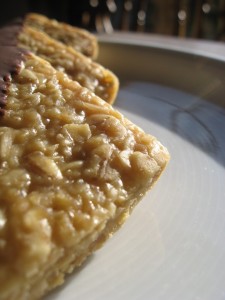
The hysteria that goes along with the so-called “Compensation Culture” is generally nowhere more misplaced than in relation to accidents to children at school. Parents who instruct solicitors to pursue claims for damages for injuries to their children sustained in school will usually only experience disappointment. That’s not say that these claims can never succeed but “health and safety gone mad” tends to crop up a lot in this context. The standard of care expected of a school is that of the reasonable parent. Castle View School in Canvey Island, Essex, has reportedly banned triangular flapjacks after a student was struck in the face by one at break time. Canteen staff have been instructed that in future they must cut flapjacks into squares or rectangles. A spokesman for the school said: "I can confirm that the texture and shape of the flapjacks were reviewed following an isolated accident last week." A spokesman for the Health and Safety Executive said, pointedly: "We Continue Reading